
Danish chemist's invention could make counterfeiting a thing of the past
Every year, companies lose billions of kroner when goods are copied or illegally resold. But a new digital and legally binding fingerprint developed at the University of Copenhagen makes products impossible to counterfeit. Royal Copenhagen is among the first brands in the world to use the solution.
In 2024, the Danish Customs Authority destroyed 37,916 copies of watches, bags, clothing, jewellery and furniture, with a total value of 77.7 million Danish kroner when converted to original products. Globally, counterfeit goods worth 467 billion US dollars were traded in 2021. The most well-known counterfeits are luxury goods such as bags, watches and sunglasses. Today, almost all types of products are counterfeited – from cosmetics, toys, sports equipment and car parts to electronics and medicines.
Counterfeit goods not only mean huge financial losses and hundreds of thousands of lost jobs, they can also be directly dangerous to consumers. Counterfeit medicines and cosmetics can pose serious health risks, while fake electronics can suddenly catch fire. Yet the problem is growing year by year.
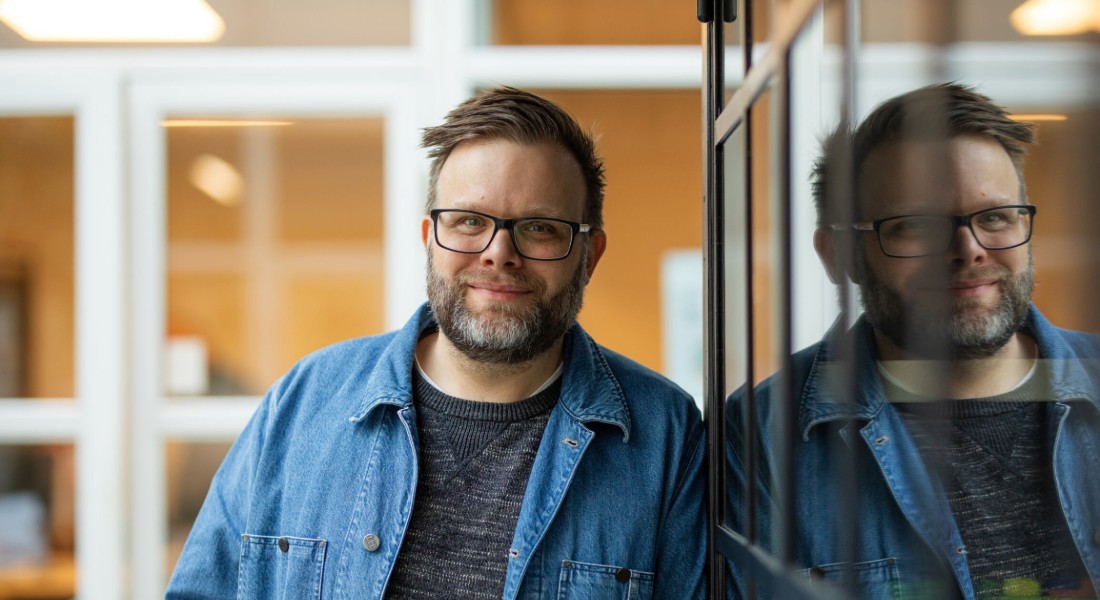
Thomas Just Sørensen, a chemist at the University of Copenhagen, has invented a unique solution to combat this problem. Together with Danish entrepreneurs and investors, he has developed the O−KEY® technology – a kind of digital fingerprint that makes any physical product impossible to counterfeit.
"Imagine throwing a handful of sand onto a glass plate. The grains of sand will land in a random pattern that is impossible to copy. We use exactly the same principle when we produce our artificial fingerprints," says Thomas Just Sørensen.
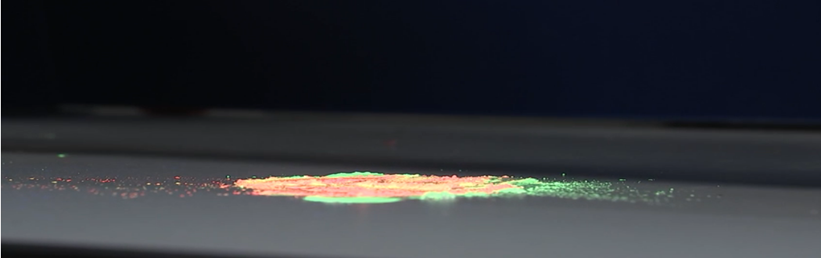
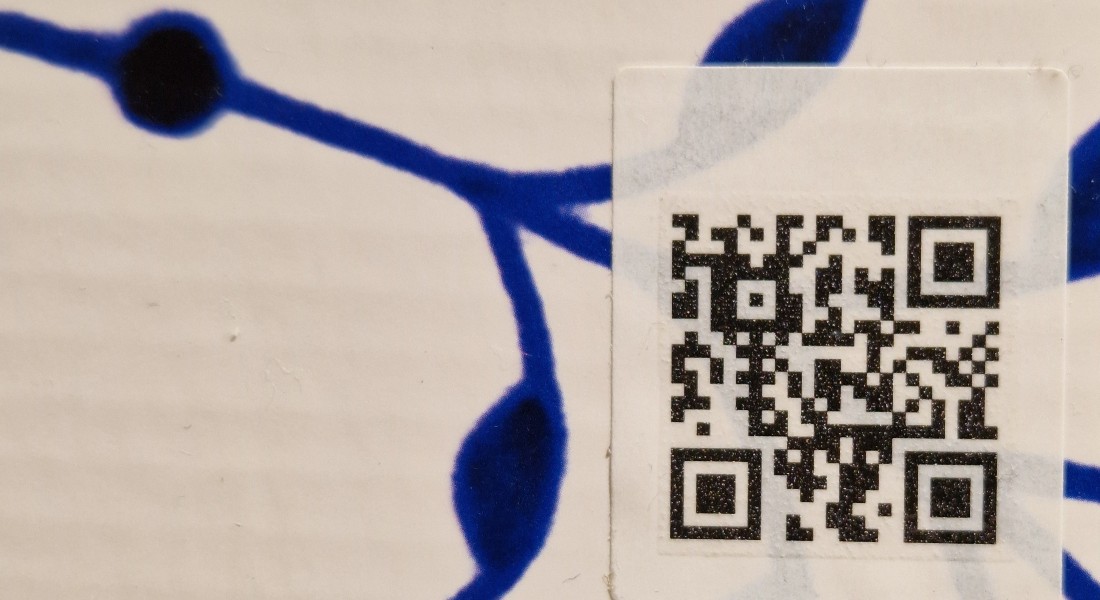
The fingerprint consists of a mark measuring one millimetre square, which is sprayed onto either the product itself or its packaging using transparent ink. The ink contains various microparticles that form a random pattern that could never be recreated. The mark is embedded in a tiny area, is scannable with a standard smartphone, and serves as legally recognised proof of authenticity.
“The marking gives companies an unprecedented opportunity to protect their products, enforce contracts and document authenticity down to the individual item level,” says Thomas Just Sørensen.
Unique identification of Royal Copenhagen products
The Danish porcelain company Royal Copenhagen is delighted with the new technology. The company is among the first brands in the world to use the labelling, and the results are already good in the initial implementation. Royal Copenhagen has initially used O-KEY® as a method to track the journey of their products to the end consumer.
"O−KEY® has set new standards for how we protect our brand. The implementation gave us immediate transparency across our distribution chain – and assurance that our products are protected with legally recognised proof. It is simple, effective and absolutely crucial," says Allan Schefte, SVP Continental Europe Fiskars Denmark A/S.
In addition to royal porcelain, O-KEY labels have also been used on Kay Bojesen figures and international security products, among other things.
From university to business
The new technology is based on many years of research in materials chemistry at the University of Copenhagen. With support from the Innovation Fund and private investors, the research evolved into the company PUFIN-ID®, which today has 16 employees in Copenhagen.
Back in 2016, Thomas Just Sørensen overheard some colleagues talking about PUFs – physically unclonable functions – at a conference in northern France, and became interested in developing a fingerprint that is impossible to clone. Two years of research later, the professor published a scientific article in Science Advances about his groundbreaking technology, which the company O−KEY® is built around.
Since then, the company has grown steadily and has, among other things, built its own IT infrastructure, labelling machines and AI solution that keeps track of all the digital fingerprints that are made.
"We have gone from having advanced science in a laboratory to having a mass-produced product and an app that you can download directly from the AppStore. Today, we see how O-KEY® technology can protect both Danish design classics and international luxury brands – while strengthening consumer confidence in security components and critical infrastructure. This shows how far university research can reach," says Thomas Just Sørensen.
Link to research articleshttps://sites.google.com/view/tjsgroup/publications
About Thomas Just Sørensen
Born: 1 June 1981, Aalborg
Position: Professor of Chemistry at the Department of Chemistry, University of Copenhagen
Education: BSc, MSc and PhD in Chemistry from the University of Copenhagen
Career: Postdoc at the University of Oxford and has worked at UCLA, Caltech, Geneva, since 2014 employed at the University of Copenhagen, where he is now a professor.
Research: Works with lanthanide chemistry, fluorescent dyes and optical sensors for anti-counterfeiting, among other things.
Entrepreneurship: Co-founder of the companies PUFIN-ID, FRS-Systems and KU-dyes.
Awards: Villum Young Investigator (2016), Lundbeckfondens Talentpris (2011) m.fl.
Contact
Thomas Just Sørensen
Professor
Department of Chemistry
University of Copenhagen
+45 28 56 95 57
tjs@chem.ku.dk
Michael Skov Jensen
KU Press Office
93 56 58 97
msje@adm.ku.dk