
18 UCPH Researchers Bring Science to Roskilde Festival
The University of Copenhagen and Roskilde Festival have entered a new partnership aimed at giving young people a different kind of encounter with research. This summer, researchers will move onto the festival grounds with sensory and engaging activities.
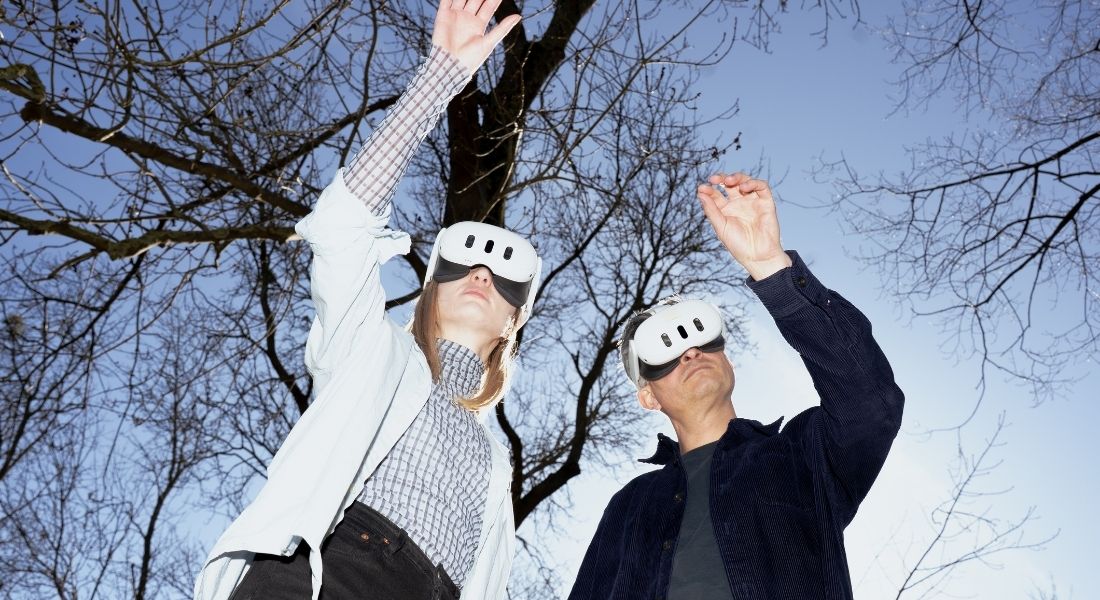
For three days, a handful of experiments will move out of the laboratories and onto the festival site in Roskilde. Here, festivalgoers can stimulate their minds and gain new knowledge in between concerts and camp life.
The initiative has been created in collaboration with Roskilde Festival’s Arts and Activism programme. Together with researchers from the University of Copenhagen, they have developed five concepts that combine research communication with body, art and culture.
The initiative is driven by a desire to reach young people where they already are – at a time marked by misinformation and fast-moving news cycles.
“Roskilde Festival is a place where young people are open, curious and ready for new experiences. That makes it an ideal platform for introducing them to science in a different way,” says Kristian Lauta, Prorector for Education at the University of Copenhagen and long-time regular at Roskilde Festival.
Science Through the Senses
The five concepts range from a spacey guided meditations based on research into brain anatomy to workshops on cocktails infused with chemical reactions and roadside biology. What they all have in common is that they invite participants to get involved and experience research through their senses.
Emma Aller, a PhD in molecular biology, is one of the people behind the cocktail workshop. She is looking forward to meeting the audience: “When research is communicated through something tangible and interactive, completely different and often surprising conversations can emerge. It’s also a fantastic opportunity to engage with a younger audience that we would not normally reach.”
What Can You Experience?
Den ultimative fællesdans
Put on your dancing shoes, grease your hips and get ready to learn the professor's power dance: A dance created to make your brain release delicious chemistry, tighten the bond between people and build a bridge from the brain to the body.The dance is put together by choreographer Clara Herman and based on Anke Karabanov's research into the body-brain connection.
See the event in the Roskilde Festival programme
Ukrudtsdrinks
Join us on a tour of Roskilde's scenic backyard and learn about berries and weeds with cocktail potential. We'll delve into the chemistry of berries and talk about the potential of plants and the future of food. We'll end the tour by making mocktails so you can turn your new knowledge into delicious drinks. Your tour guides are biologist and podcast host Emma Aller and chemist Kasper Hinz.
See the event in the Roskilde Festival programme
KEEP YOUR GAINS
Have you been working out all year to show off your six-pack all summer? Festivals and summer days can be poison to your gains. To combat that we've invited Denmark's leading exercise scientists for a very special workout session, where you can learn what it takes to keep your gains while still enjoying cold cocktails and absolute freedom. We promise you push-ups, protein shakes and pro tips from the professor. Your trainers are Julie Kissow Kristensen, Emil Lundgren Pedersen, Emil Winther Westi, and Morten Hostrup.
See the event in the Roskilde Festival programme
Meditation: Walk Your Brain
Make yourself comfortable on the yoga mat, take a deep breath and give your brain a break from the bu. Welcome to a guided meditation, where you will, among other things, move through the amygdala, medulla oblongata and cerebellum… In other words: Your own brain! Your senses are working overtime during a festival and it can be difficult to find time for a break. This is where you can go to find peace. Neuroscientist Martin Fredensborg Rath and meditation instructor Marie Mansachs will guide you through the meditation.
See the event in the Roskilde Festival programme
Virtual Reality Experiment
A team of scientists is pushing the boundaries of how scientific information can be communicated. As part of their research, they invite you to experience the world as you have never seen it before. Dive in to their virtual reality experiment and help the researchers in their search for answers. All you have to do is to put on a pair of VR google and get lost in new realities.
Your virtual tour guides are Professor Guido Makransky and Assistant Professor Adéla Plechatá.
For the University of Copenhagen, the initiative is part of a broader effort to bring research into new contexts and make it an active part of public conversation.
“If we can spark even a little curiosity among some of the many festivalgoers, then we have already achieved something important. The role of the university is not only to produce new knowledge, but also to actively bring it into society, make it relevant to people in their everyday lives and give them the tools to ask questions,” says Kristian Lauta.
The 18 researchers can be experienced at the festival site from 28 to 30 June during Roskilde Festival’s First Days.
Contact
William Højgård Demant
Communications consultant, KU Medier
Mail: william.demant@adm.ku.dk
Phone: 25 12 40 80