
‘Voluntary’ solitary confinement makes prisoners in Danish prisons ill
Eight per cent of prisoners in Danish prisons choose so called voluntary solitary confinement to avoid violence from other inmates. However, this ‘voluntary’ isolation is unregulated, and many vulnerable prisoners experience long periods of isolation as deeply harmful and as a form of double punishment, new research from the University of Copenhagen and the Danish Institute for Human Rights shows.
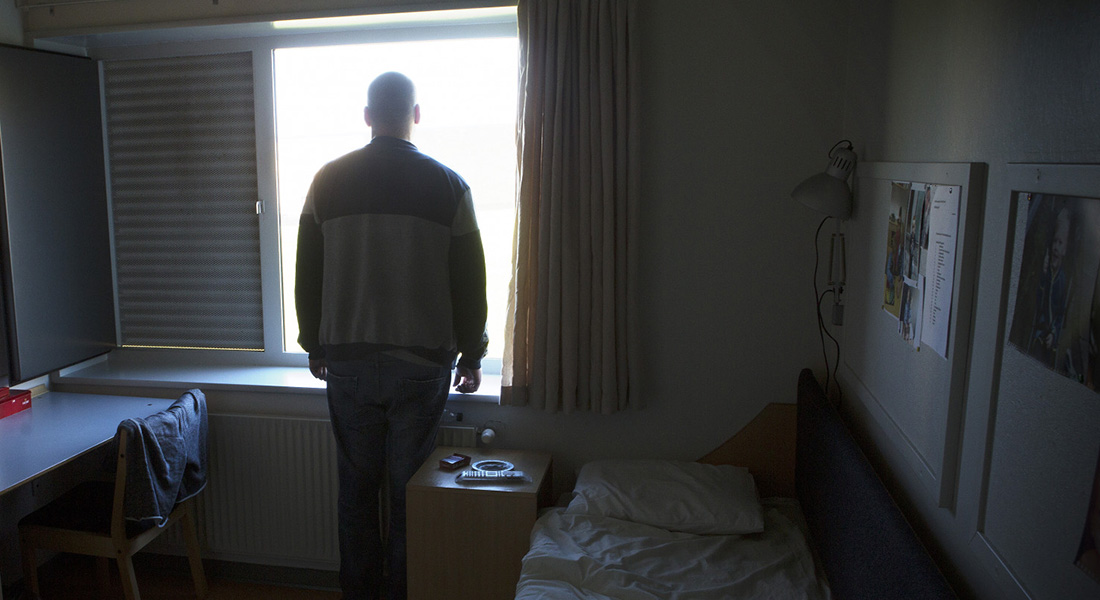
Most people associate the word voluntary with having a genuine choice. But for many prisoners in Denmark, voluntary isolation is not a real choice – it is a last resort.
In a new PhD dissertation, Frederik Rom Taxhjelm from the University of Copenhagen shows that long-term voluntary solitary confinement is often something prisoners feel forced to choose because they fear violence from other inmates.
“In reality, they are confronted with an impossible choice: violence in the prison community or suffering in isolation. They rarely know what they are consenting to, but they are desperate enough to choose exclusion regardless,” says Frederik Rom Taxhjelm.
Because prisoners formally consent to voluntary isolation, prison authorities are not required to limit either its harmful effects or its duration. As a result, isolation can last for months – and in extreme cases for years. According to the researcher, this is highly problematic.
“All research shows that solitary confinement is deeply harmful – physically, psychologically and socially. That is why the state regulates and limits all other forms of isolation in Danish prisons. But because prisoners have, on paper, chosen the isolation themselves, this practice has for decades escaped attention and criticism,” he says.
‘Like slowly drowning’
In his dissertation, Frederik Rom Taxhjelm interviewed 29 prisoners subjected to long-term voluntary isolation and five managers of isolation units across seven different prisons in order to examine how voluntary isolation works in practice and how it is experienced by the prisoners.
“Once a prisoner is isolated, much of what normally constitutes prison life disappears: workshops, education, programmes and social relations. Isolation makes time in prison feel meaningless. Those most affected described it as slowly drowning or being buried alive. They experience intense suffering – and at the same time a sense that their suffering goes unnoticed,” he explains.
Prisoners with mental vulnerabilities are particularly affected. Isolation can exacerbate anxiety, depression and mental illness, and several interviewees described self-harm, suicidal thoughts and a feeling of moral emptiness.
The study also shows that the consequences of voluntary isolation extend beyond prison walls. Register data reveal that formerly voluntarily isolated prisoners have more than twice the risk of dying from non-natural causes – such as suicide, overdose or violence – in the years following release.
“The study does not show causation. But the fact that voluntary isolation is associated with a markedly increased risk of death after release is concerning. It highlights both the severity of the practice and the broader marginalisation that characterises this group,” says Taxhjelm.
Voluntary and involuntary isolation should be treated equally
Frederik Rom Taxhjelm argues that the current practice in Danish prisons is unsustainable because long-term voluntary isolation is, in reality, not voluntary – and because it is severely harmful. As a result, a large group of prisoners are denied the basic safety and dignity they are entitled to while in state custody.
“Prisoners seek protection but receive isolation. Because voluntary isolation is unregulated, there are no national standards, and practices vary widely between prisons. Some isolated prisoners have access to limited social contact, others do not. Some prisons apply harm‑reduction measures; others do not,” he says.
“If ‘voluntary’ exclusion is in fact coerced because the alternative is violence, then it should be treated on a par with involuntary isolation. Prisoners placed in compulsory isolation by the state enjoy far stronger protections and accrue rights and support proportional to the length of their isolation.”
The state abdicates responsibility
One challenge, Taxhjelm notes, is that Danish prisons are currently under severe strain. However, voluntary isolation is not a new phenomenon, and its prevalence may therefore point to a broader structural problem.
“It is essential to regulate voluntary isolation. But offering a few additional activities or a couple of extra hours outside the cell does not address the core issue. The state has a responsibility to guarantee safety and dignity during imprisonment – and that responsibility is effectively individualised through voluntary isolation.”
Although granting prisoners an explicit right to isolation is internationally unique, the problems it seeks to address are well known, says Taxhjelm.
“Prisons around the world face the same vulnerable groups: people who have testified in criminal cases, who want to leave gangs, who suffer from mental illness, or who have committed sexual offences. But to my knowledge, no other country has responded by giving prisoners the right to isolate themselves. This responsibility should be reclaimed by the state, rather than outsourced to those in its care.”
About voluntary solitary confinement
- Of all prisoners who spent more than seven days in a Danish prison or remand facility between 2010 and 2022, eight per cent experienced voluntary isolation
- More than 5,000 individuals were subjected to voluntary isolation during this period
- A period of voluntary isolation lasts 31 days on average, and the longest isolation periods are the most harmful
- Only six per cent of voluntarily isolated prisoners were convicted of sexual offences
- 41 per cent were convicted of violent offences
Unlike involuntary solitary confinement, voluntary isolation is subject to no equivalent oversight or legal safeguards:
- There is no maximum duration for voluntary isolation
- Prisons are not required to mitigate the harmful effects
- Because isolation is formally a right, it is solely the prisoner’s responsibility to terminate it
- Voluntarily isolated prisoners lose access to rehabilitative and recreational activities that otherwise characterise imprisonment in Denmark
Contact
Frederik Rom Taxhjelm, PhD
Faculty of Law
University of Copenhagen
Email: frederik.taxhjelm@jur.ku.dk
Phone: +45 24 47 03 06
Carsten Munk Hansen, press officer
University of Copenhagen
Email: carstenhansen@adm.ku.dk
Phone: + 45 28 75 80 23