
Economy
22 October 2025
Homeowners stand in the way of wealth taxation
Inequality
Although wealth inequality is rising across Europe, taxes on wealth, inheritance, and capital gains have been weakened or abolished in many countries. A major new study identifies the reason in a specific demographic group: homeowners.
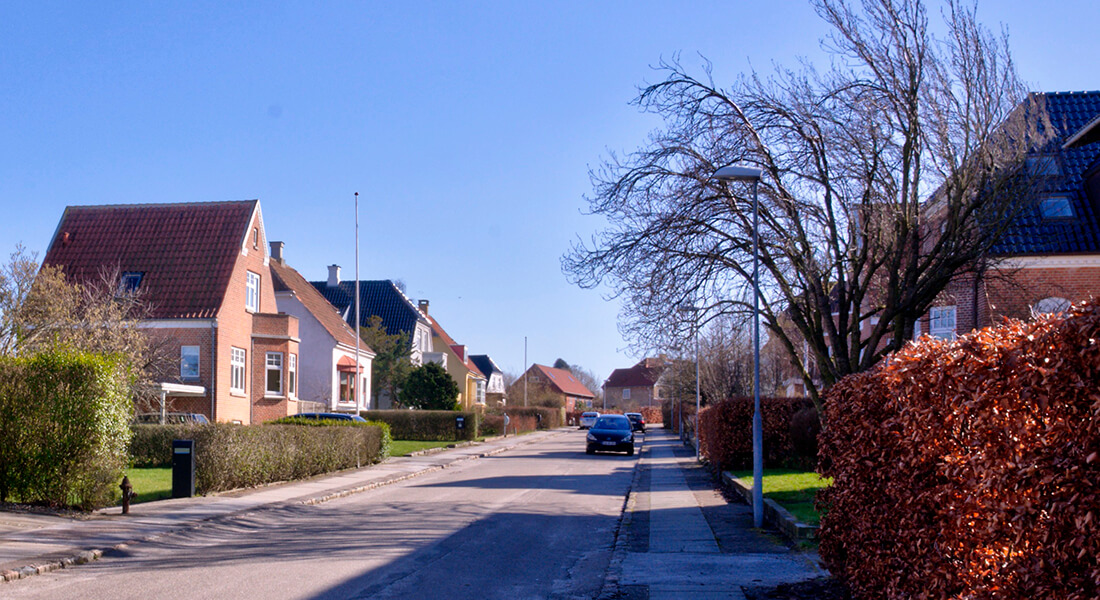
Researchers from universities including Copenhagen and Oxford have found the answer to why declining wealth taxation in European countries faces little resistance: Homeowners and their children form a politically powerful group that opposes higher wealth taxes – while those who would benefit from such taxes know too little to protest.
‘It’s not necessarily because people love inequality. But those who would gain from higher wealth taxes – especially low-wealth renters – often don’t have a clear opinion on the issue. They simply lack information and incentive to engage,’ says Mads Elkjær, Assistant Professor at the Department of Political Science at the University of Copenhagen.
Homeowners have strong interests – and strong opinions
In a study based on survey data from seven European countries, Mads Elkjær and his research colleagues show that the greater a person’s housing wealth, the less they support wealth taxation. And the more they expect to inherit, the stronger their opposition to inheritance tax.
A supplementary study from the UK confirms this pattern and goes even deeper: Low-wealth renters not only lack knowledge – they often have no opinion at all on inheritance tax. In a British survey, up to 40 percent answered “don’t know” to questions about inheritance tax, and many of them were renters.
‘We call it a democratic paradox. Those who would benefit most from redistribution are the ones not participating in the debate. And those who would pay are well-informed and politically active,’ says Mads Elkjær.
Information Works – but only if it’s concrete
The researchers also tested whether it’s possible to help low-wealth individuals form opinions by providing them with information. In the UK study, participants were shown either statistical facts about housing wealth or concrete arguments for and against inheritance tax.
‘The surprising finding is that statistical information about inequality doesn’t change anything. But when we explain how inheritance tax can fund welfare or create more equal opportunities, people become more positive – especially renters,’ explains Mads Elkjær.
Conversely, the argument about “double taxation” has a strong negative effect. It makes both homeowners and renters more skeptical of inheritance tax.
Silence blocks political action
Both studies point to homeowners and their children forming a kind of “issue public” – a group with strong, informed, and consistent opinions that politicians listen to. Low-wealth renters, on the other hand, have weak or no opinions and are therefore overlooked.
‘This means that political proposals to increase inheritance or wealth taxes often face resistance from those with the most to lose, while those with the most to gain remain silent. And that makes it difficult for governments to use wealth taxation as a tool against inequality,’ concludes Mads Elkjær.
The paper ‘Why is it so Hard to Counteract Wealth Inequality? Evidence from the United Kingdom’ is published in the academic journal World Politics. It can be read here.
Contact
Mads Elkjær, Assistant Professor
Department of Political Science
Email: mael@ifs.ku.dk
T: +45 35 33 28 84
Simon Knokgaard Halskov
UCPH Communication
Email: skha@adm.ku.dk
M: +45 93 56 53 29